


Poor vision not only knocks a person out of his usual circle, but also prevents him from living a full life and doing what he loves.Modern ophthalmology constantly offers new methods for treating eye pathologies, the main one being eye surgery.Let's learn more about the methods of operations and their main features.
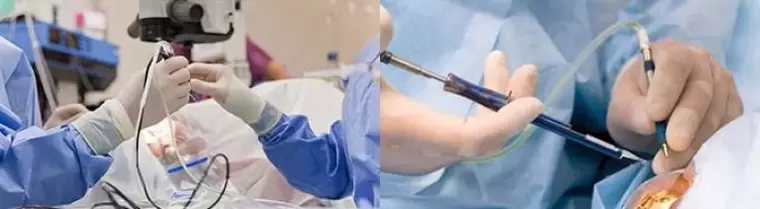
To do or not
There is an opinion that modern eye surgeries are guaranteed to be safe, as they are carried out as quickly, easily and painlessly as possible.
However, the apparent simplicity of such interventions is deceptive, since even any cosmetic surgery is a risk.
Most often, ophthalmologists offer surgery to correct such very common eye diseases as:
- cataract;
- myopia;
- farsightedness.
Before the patient makes a decision, he should know about all the pros and cons of surgery.There are clear indications for which eye surgery is necessary.Such interventions are performed in the following cases:
- professional need for the best possible vision (military, professional athlete, actor, etc.);
- a noticeable difference in eye refraction (with different degrees of myopia in the right and left eyes), which cannot be corrected with glasses: no eye can tolerate glasses with a difference of more than 2.5 diopters.
The desire of patients to improve vision is acceptable if there are no direct contraindications for surgical interventions.
After all, higher visual acuity allows you to live a better quality of life.Having restored vision, a person can learn new skills: for example, driving a car or mastering a computer after replacing a lens for cataracts.Women often decide to undergo eye surgery for aesthetic reasons, dreaming of getting rid of glasses.
You should approach the issue of eye surgery in childhood especially carefully.The child is not yet able to make the right decision himself, and instead, all possible risks of such an intervention should be assessed by adults.

Types of eye surgeries
There are many types of ophthalmic surgeries.For example, eye surgery eliminates many eye defects (myopia, lens opacity).Nowadays, patients are often offered surgical treatment with laser or ultrasound for severe eye pathologies such as retinal detachment or rupture.Surgical interventions on the lens, replacing it with an artificial one, are used in the progression of cataracts.Sometimes ophthalmologists are forced to remove the contents of the eyeball or cornea during purulent inflammation (panophthalmitis).On the vitreous body, intervention is indicated if it is damaged or if there is blood (hemophthalmos).In this case, vitrectomy is proposed - removal of the vitreous body.What types of eye surgical interventions are used in modern ophthalmology?
Let's take a closer look at the main methods of eye surgery.
Scleroplasty
This intervention is performed to strengthen the membrane of the eyeball.
Scleroplasty can stop the progression of myopia, but it cannot restore vision.
The operation is performed under local anesthesia and lasts about half an hour.It involves inserting a flap of sclera-reinforcing material into the eyeball.For this purpose, silicone, biological material or tissue from the patient himself is used.Subsequently, the flap “couples” with the outer eye membrane and further growth of blood vessels into it occurs.
Scleroplasty can be of several degrees of complexity (depending on the severity of the pathology): simple, simplified or complex.
A contraindication to scleroplasty is the patient’s allergic reaction to the material used.
Vitrectomy
During a vitrectomy, the surgeon is forced to remove (partially or completely) the vitreous humor from the eye.
This complex intervention must be performed by a highly qualified surgeon using high-tech equipment.
Indications for such treatment are:
- eye injury;
- hemorrhage into the vitreous cavity;
- vitreous opacification;
- retinal rupture or detachment.
Vitrectomy is performed with local anesthesia on an outpatient basis.Usually 2-3 hours are enough for this.After fixing the eye with an eyelid dilator, a micro-incision is made in it.Then, using special miniature instruments, the vitreous body is removed, and an artificial lens is inserted in its place.Also, a special liquid or silicone substitute is used as a vitreous replacement.
However, such intervention may be contraindicated in some conditions.They are:
- pregnancy;
- blood diseases;
- high degree of corneal opacity.
Laser coagulation of the retina
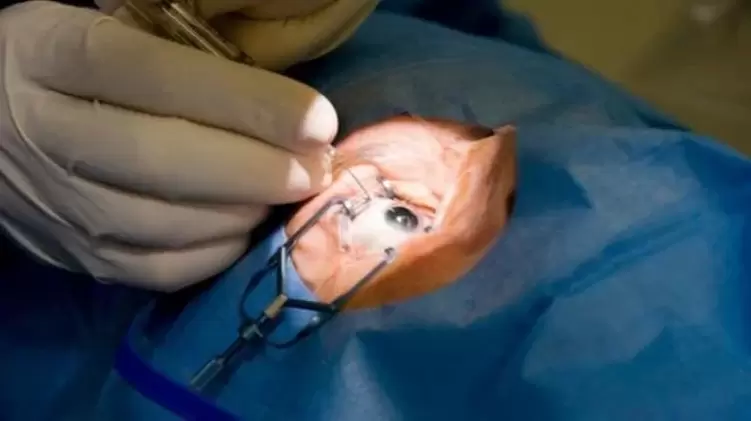
Laser photocoagulation of the retina is performed on an outpatient basis using a laser.The intervention lasts only about 20 minutes, and pain relief is applied in the form of drops.There is no blood loss with this type of operation.A lens is placed over the eye through which the laser is directed.At the same time, due to the high temperature, the torn vessels or tissues in the eye are glued together.The effectiveness of this operation is high (up to 70%).The patient is allowed to go home the very next day.
Indications for surgery are:
- retinal pathology (detachment, dystrophy, vascular pathology);
- eye tumors;
- thrombosis of the central vein.
Strabismus Correction
Most often this intervention is done in childhood (from 2 to 5 years).Sometimes the operation is also performed on adults if the strabismus is acquired, or it could not be treated previously.Surgery for strabismus lasts up to 30 minutes and consists of restoring the normal position of the eyeball.At the same time, the aesthetic problem of the patient’s appearance is solved and vision is restored.
For this pathology, there are two types of surgery:
- strengthening: if the eye muscle needs to be stretched;
- relaxing: if the eye muscle needs to be relaxed.
The intervention is performed with local anesthesia using an eyelid dilator.Usually the patient is discharged on the day of surgery, and he recovers within a week.
Indications for this correction are:
- impaired mobility (paralysis or paresis) of the extraocular muscles;
- any degree of strabismus.
Crosslinking
Cross-linking refers to operations on the ocular cornea for pathologies.This is done to strengthen and strengthen the ligaments of the corneal tissue.
This intervention is performed under local anesthesia.In this case, part of the cornea is cut off, and the eye itself is irradiated to thicken the corneal layer.A protective lens is then placed over the eye.After 2-3 days the patient is discharged.Usually the effect of the operation lasts for 10 years.
A similar operation is performed when:
- degenerative-dystrophic processes of the cornea;
- bulging areas of the cornea;
- keratoconus.
Eye surgery to treat glaucoma
This eye surgery is indicated for ineffective drug treatment of glaucoma.
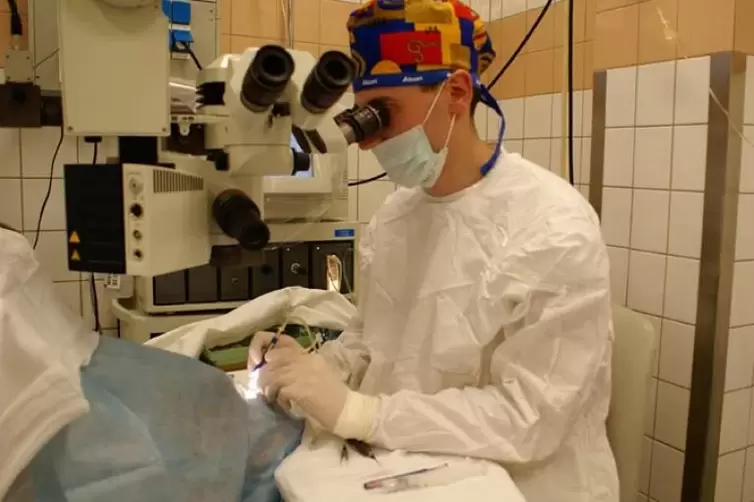
Modern clinics mainly use laser operations without a knife, since they are low-traumatic, painless and have a minimum of complications.
This uses a laser beam to create a hole to remove excess fluid from the eye.For the open-angle form, non-penetrating deep sclerectomy is used.In this case, the corneal layer is artificially thinned to lower intraocular pressure.
The risk of complications with this intervention is minimal.However, the therapeutic effect of such an operation may decrease over time.
Cataract removal
This is one of the most common operations.In this case, methods are used to completely remove the lens and replace it, together with the capsule (or without it), with an artificial lens.
The most modern method for cataracts is the removal of the clouded lens using a laser or ultrasound.
An artificial lens is inserted to replace the damaged one.The operation is seamless and lasts about 15 minutes.
Such interventions for cataracts are usually performed when conservative treatment is ineffective or for progressive types of cataracts (posterior capsular).More often, mature cataracts are treated surgically.
The postoperative regimen lasts about 1.5 months.It is especially important for the engraftment of the lens and the prevention of its rejection (limiting heavy lifting, eliminating thermal procedures, etc.)
Laser vision correction
This is the most popular type of ophthalmic intervention to improve visual acuity.Its effectiveness is unique - almost 99%.
Laser correction is carried out for:
- farsightedness:
- myopia;
- astigmatism.
This operation is performed under local anesthesia.Next, the corneal layer is ground down with a laser to the desired level.
Although this operation has a lot of fans, it has many contraindications:
- eye pathologies (cataracts, glaucoma, corneal dystrophy, inflammatory diseases, etc.);
- progression of the patient’s myopia (diabetes mellitus, herpes, neurodermatitis, thyroid problems, etc.)
The main methods of laser correction are LASIK and PRK, as well as many varieties of these methods.
The LASIK method is especially preferred by ophthalmologists due to its short postoperative period and painlessness.
This operation lasts about 20 minutes for both eyes, using local anesthesia.
The inconvenience for the patient is that at the postoperative stage he is faced with “corneal syndrome”.
This is a condition in which the following symptoms are observed:
- photophobia;
- pain, cutting;
- lacrimation.
Medicines (analgesics, steroids) help to cope with such manifestations.The postoperative period includes a number of restrictions (visiting saunas and baths, limiting alcohol, avoiding heavy lifting, abstaining from pregnancy for a year).
Rehabilitation after surgery
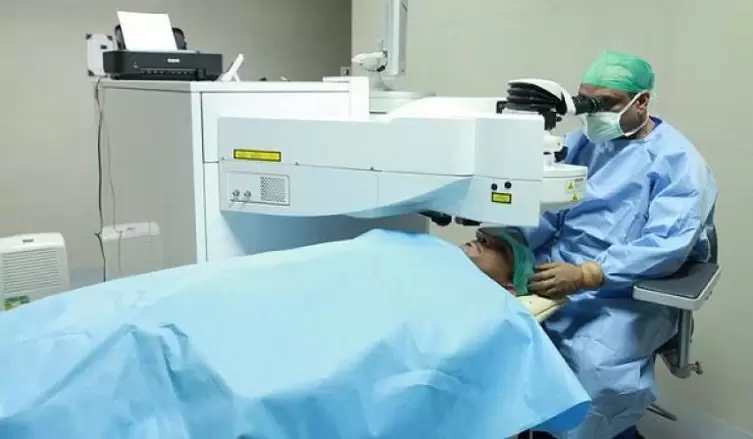
After any surgical intervention, the most important stage is the postoperative period.
If you do not follow the prescribed regime, the consequences can be quite tragic.Let's consider the basic recommendations that are important for the patient to follow after any such operation:
- In the first days after surgery, it is forbidden to rub your eyes with your hands, and washing your face must be replaced by wiping with a swab with boiled water.You will be able to use facial soap after a month.
- When going outside, a blindfold or goggles are required to prevent dust particles from getting into your eyes.
- You can wash your hair only without getting shampoo on your face.
- For a week after the operation, it is forbidden to read, drive a car or watch TV.
- It is recommended to use blueberry preparations to quickly restore vision.
- When outdoors, it is important to use tinted glasses (for UV protection) for 2-4 weeks.
- The use of decorative cosmetics for the eyes is allowed no earlier than a month after the operation, since the ingress of cosmetic particles is extremely undesirable.
- Doctors do not recommend getting pregnant for the first three months after the intervention.
- Typically, the doctor schedules consultations 1, 3, 6 and 12 months after surgery.
- You can start working after surgery only after complete restoration of vision (usually after 2-3 weeks).At the same time, it is important to avoid excessive eye strain (secretaries, accountants, programmers, etc.)
- During the year, you should not sunbathe, have contact with pets or children, or actively engage in sports (to avoid corneal injuries).
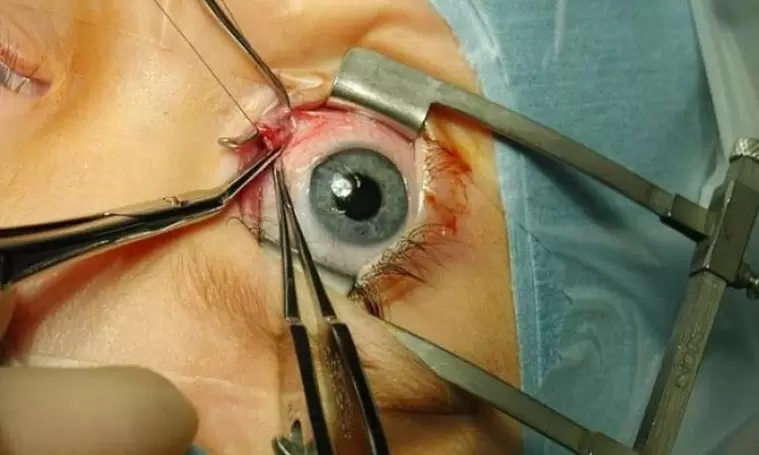
Complications
Regardless of the type, complications are possible after any eye surgery.Such complications may be:
- lens displacement;
- seam divergence;
- increased intraocular pressure;
- retinal detachment;
- blurred vision;
- inflammation of the membranes of the eye;
- corneal clouding;
- vitreous hemorrhage;
- secondary cataract.
Complications after surgery require serious and expensive treatment.You should not take any eye surgery lightly, especially if you can do without it.
Most people still decide to undergo surgical treatment of eye diseases and subsequently receive excellent results.It is important to carefully choose a clinic for treatment and contact only real professionals in order to reduce troubles during eye surgery to a minimum.